How foreigners invest in a villa in Indonesia
By Medusia · Updated November 2, 2026
Foreigners can't hold freehold land in Indonesia, but they can invest in a villa legally. The usual routes are a leasehold (a long-term lease), an Indonesian foreign-owned company (PT PMA) that holds the property, or a profit-sharing agreement. Each one gives different rights, and it's worth reviewing yours with an independent lawyer.
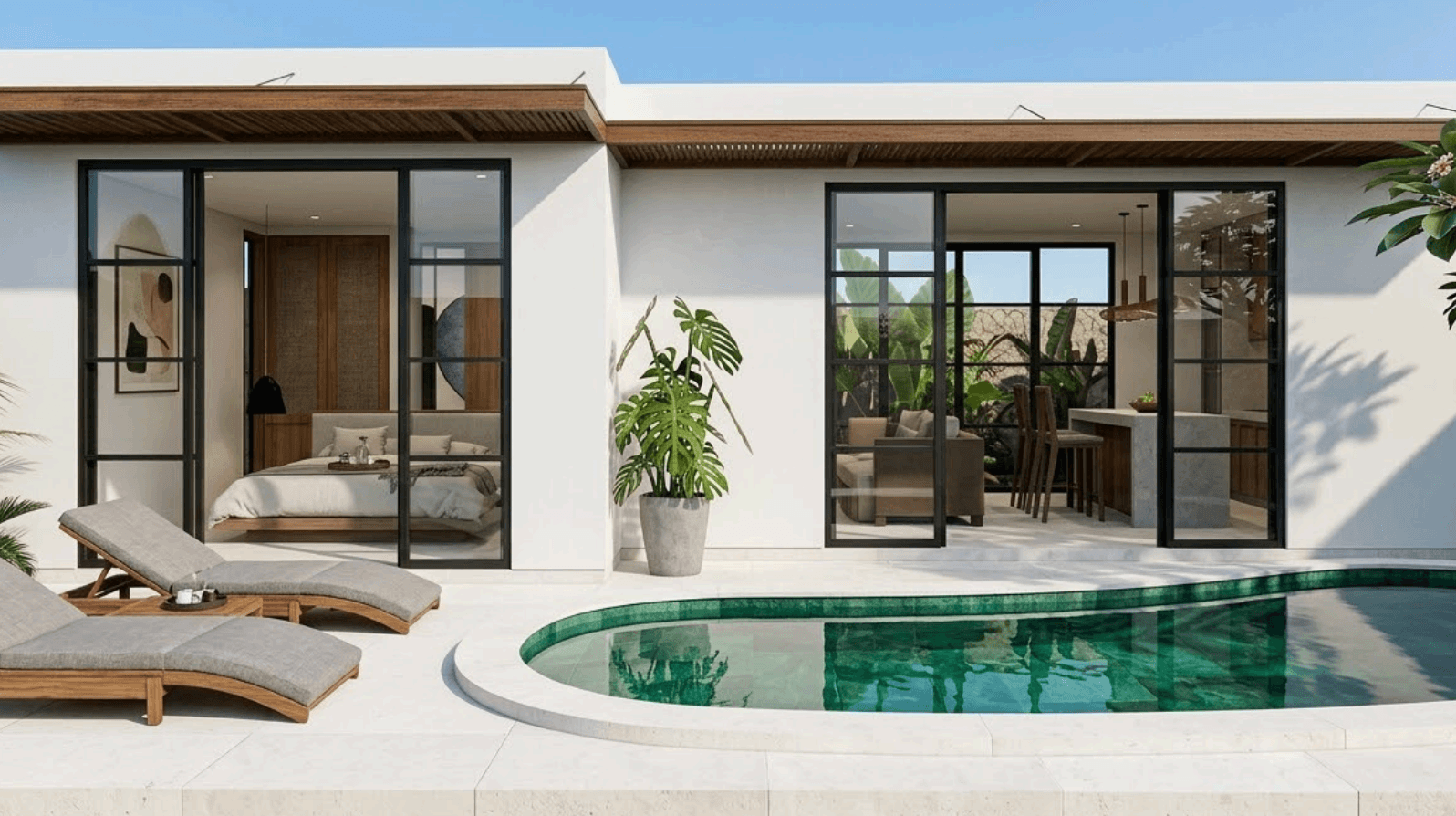
What foreigners can hold in Indonesia
Indonesia's 1960 Basic Agrarian Law reserves freehold land (Hak Milik) for Indonesian citizens. Any direct or indirect transfer to a foreigner is void (Cekindo). That's why there is no freehold for foreigners, and arrangements with an Indonesian nominee don't protect the investor: courts have refused to enforce them (Cekindo).
What does exist:
| Right | Who can hold it | Term | Registered with the land office (BPN)? |
|---|---|---|---|
| Hak Milik (freehold) | Indonesian citizens only | Indefinite | Yes |
| Leasehold (Hak Sewa) | Anyone, including foreigners | Set by the contract; usually 25–30 years with an extension option (Emerhub) | No: it's a contract (DFDL) |
| Hak Pakai (right of use) | A foreigner with a valid immigration document, for their own home | Up to 30 + 20 + 30 years (Cekindo) | Yes |
| Hak Guna Bangunan (HGB, right to build) | A company, such as a PT PMA | Up to 30 + 20 + 30 years (Cekindo) | Yes |
Hak Pakai is designed for a personal home: it requires a minimum price per province and doesn't allow renting to tourists (Emerhub). That's why, for investing in holiday villas, the usual structures are leasehold, PT PMA and profit-sharing agreements.
The three structures compared
The key difference is what exactly you own: a contract to use the villa, a stake in a company that holds the property, or a right to profits.
| Leasehold | PT PMA | Profit-sharing | |
|---|---|---|---|
| What you hold | The right to use and operate the villa for the contract term | Shares in an Indonesian company that holds the right to the property (HGB) | A percentage of the project's operating profits |
| Document | Notarised lease agreement | Company deeds and HGB certificate in its name | Profit-sharing agreement |
| Registered? | No | Yes, in the company's name | No |
| Term | The contract term | Up to 30 + 20 + 30 years (HGB) | The contract term |
| Investor obligations | Few: set by the contract | The company must file quarterly investment reports (LKPM) and annual accounts (Emerhub) | Few: set by the contract |
| Holiday rental operation | Usually run by the developer under its tourism licence | The licence is held by the investor's PT PMA, which holds the HGB | Run by the project developer |
| Medusia projects | Linton, Pink Twin, Passir, Verónica | Mediterranean and Selvatic (one PT PMA per investor, included in the price); optional for the others | Shanti Mantra |
Leasehold: how it works
A leasehold (in Indonesia, Hak Sewa) is a long-term lease. You pay upfront for the right to use and operate the villa for the agreed years. It's a contract, not a registered title, so your protection depends on how it's drafted (DFDL).
What to know
- If the owner sells the land, the lease stays in force: the buyer takes the land subject to the lease (DFDL).
- Renewal isn't automatic. A mere renewal "priority" doesn't bind the owner. What protects you is an extension guarantee with a price or formula agreed in advance (DFDL).
- When the lease ends, the buildings revert to the landowner, unless the contract says otherwise (DFDL).
- The contract must be in Indonesian (it can be bilingual, stating which version prevails) and signed before a notary (DFDL).
- Resale and inheritance: depend on whether the contract lets you assign the leasehold to a third party and pass it to your heirs. Medusia projects' contracts usually allow it, but confirm it case by case before signing.
Leasehold is the simplest structure: you don't need to set up or run a company. In exchange, your right has an end date and its value falls as that date approaches.
PT PMA: investing through an Indonesian company
A PT PMA is an Indonesian company with foreign capital. It can hold a registered right to build (HGB) for up to 30 + 20 + 30 years (Cekindo). It can also hold the licence to rent to tourists (Emerhub). It's the structure with the strongest title.
The regulations require every PT PMA to meet a minimum capital and a minimum investment plan, and to file quarterly investment reports (LKPM) and annual accounts. To rent to tourists it also needs a tourism licence, which usually takes 6 to 12 months (Emerhub). Setting up and running a PT PMA on your own just for one villa is expensive and slow.
How it works at Mediterranean and Selvatic. The developer sets up a PT PMA for each investor and handles compliance with these requirements. Each company holds the HGB over the land and the villa, registered in its name, and the cost is included in the price. The investor gets a registered title in the name of their own company without doing the paperwork themselves. According to the developer, each company's capital is evidenced by the client's investment, the land and the villa. As with any PT PMA, ask for your company's incorporation and capital documents and have your lawyer review them. For the other projects, a PT PMA is optional and paid for by the investor.
Profit-sharing agreement
With this structure you don't buy a right over the villa. You sign a contract with the developer or operator that gives you a percentage of the project's operating profits for a set term.
- Advantage: it's the simplest structure. No deeds, registration or company.
- What to weigh up: your investment depends entirely on the contract and on the strength of the other party, because you hold no right over the property.
- What the contract must make clear: how profits are calculated (revenue minus which costs), how often they're paid, what information you receive, how long it lasts, whether you can sell or pass it on, and what happens if the project is sold or stops operating.
At Medusia, Shanti Mantra uses this structure.
What to check before signing
Whatever the structure, ask for these answers in writing and review them with an independent lawyer in Indonesia.
- 01
Land title: who owns it, and that the title is registered and free of charges (DFDL).
- 02
Zoning: that the plot allows tourism use. Not every zone does (Emerhub).
- 03
Tourism licence: who holds it and in whose name the villa is operated.
- 04
Term and renewal: how many years your right covers and whether the extension is guaranteed with an agreed price or formula.
- 05
Resale and inheritance: whether you can sell or assign your right and whether it passes to your heirs.
- 06
Management contract: fee, which costs are deducted, how often you're paid and what reports you receive.
- 07
Language and form: contract in Indonesian (or bilingual, with a prevailing version) and signed before a notary (DFDL).
- 08
Payments: always to the developer, against a signed contract. Medusia never handles investors' funds.
- 09
No nominees: be wary of any proposal to put the land in the name of a trusted Indonesian (Cekindo).
Frequently asked questions
Can a foreigner buy a house in Indonesia?
Not as freehold. They can hold a right of use (Hak Pakai) for their own home, a leasehold, or invest through a PT PMA.
Which is better, leasehold or PT PMA?
A PT PMA gives a longer, registered title, but setting up your own requires minimum capital and investment plan amounts plus ongoing filings. A leasehold is simpler and cheaper, but it's a contract with an end date. At Mediterranean and Selvatic, the developer sets up a PT PMA for each investor, with the HGB in its name and included in the price: you get a registered title without doing the paperwork.
Do I need to live in Indonesia or hold a residence visa to invest?
Hak Pakai for a personal home requires a valid immigration document (Cekindo). For leasehold, PT PMA or profit-sharing, confirm the requirements with the developer and your lawyer before signing.
What happens when the leasehold ends?
The right returns to the landowner, together with the buildings, unless the contract provides for an extension (DFDL).
Can I put the villa in an Indonesian friend's name?
It's not advisable. Nominee arrangements are void and don't protect the foreigner (Cekindo).
Can I use the villa myself?
It depends on the project. In holiday rental projects, personal use is usually allowed with advance booking and without earning income on those days. Check each contract's terms.
Sources
- Cekindo: comprar una casa en Indonesia siendo extranjero (actualizado oct. 2026)
- Emerhub: cómo comprar propiedad en Bali siendo extranjero (actualizado oct. 2026)
- DFDL: riesgos legales de los arrendamientos en Indonesia (sept. 2026)
This guide is for information only and is not legal or tax advice. Review every transaction with an independent lawyer in Indonesia.